Paper certificates served organisations well for centuries. They were tangible proof of achievement — something recipients could frame, employers could inspect, and institutions could archive.
But the world has changed. Digital-first workflows, remote verification, instant communication, and sustainability mandates have exposed paper's limitations. Organisations still issuing paper certificates face increasing friction with how credentials are actually used.
This guide provides a comprehensive comparison to help you decide: should your organisation transition from paper to digital certificates?
For most of history, certificates were physical documents. Universities printed diplomas on heavy stock with embossed seals. Training providers issued completion certificates with official signatures. The system worked because most credentials stayed local, verification was rare, and digital alternatives didn't exist.
Early digitisation meant scanning paper certificates to PDFs. This solved some problems — documents could be emailed — but created others. PDFs were trivially easy to edit and forge. No verification mechanism existed. Organisations gained convenience but lost security.
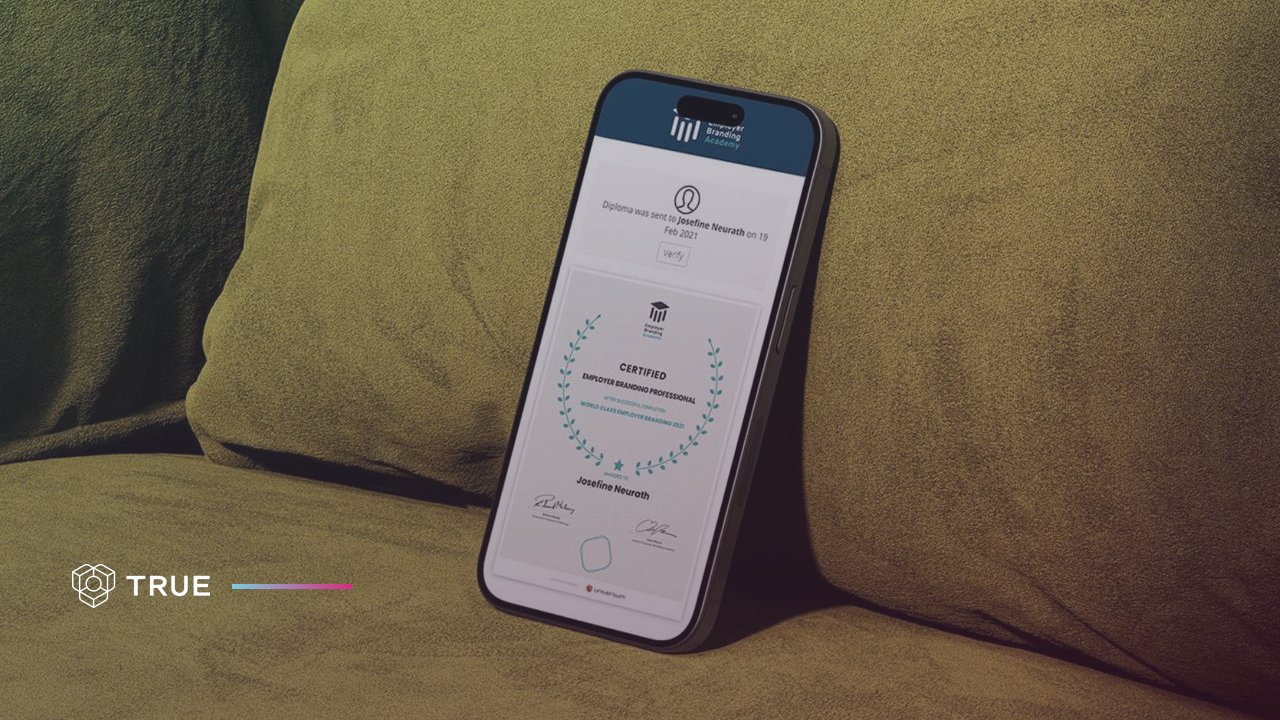
Blockchain technology enabled a fundamental shift: digital certificates that couldn't be forged. By anchoring credentials to immutable blockchain records, issuers could provide instant global verification, tamper-proof documents, permanent accessibility, and rich analytics. This wasn't just digitised paper — it was a new model of credentialing entirely.
Paper certificates carry costs at every stage: design and production (quality paper stock, security printing, embossing); per-unit printing costs; fulfillment (envelopes, postage, tracking); replacements when certificates are lost or damaged; and physical archive storage requiring space and climate control.
A single paper certificate may cost €5–15 to produce and deliver. For organisations issuing thousands annually, these costs compound significantly.
Paper credentials face endemic fraud risks:
For guidance on detecting fraudulent credentials, see our fake certificate verification guide.
Paper certificates resist the ways modern professionals need to share credentials: scanned images have no verification; sharing requires physical presence or digitisation; paper archives cannot be searched; and when credentials expire or status changes, paper documents remain unchanged.
Physical documents face physical threats: environmental damage from water, fire, and humidity; dedicated archive space requirements; loss when staff changes occur; and degradation over decades.
Digital platforms provide data paper never could: engagement tracking (when, where, how often credentials are viewed); share monitoring across platforms and networks; geographic insights into where verification activity occurs; and verification patterns showing which credentials generate most employer interest.
A framed certificate hangs in one hallway. A PDF sits in one folder. Both are private objects, and the course behind them is invisible to anyone who was not in the room.
A TRUE certificate lives on your domain, gets indexed, and travels wherever the recipient shares it. Your courses can also be published in TRUE Upskill, a public catalog where someone looking for training finds the programme and enquires directly with you.
Both are included in your subscription, free for you to list and free for the person searching.
Paper protects a record. Digital fills the next class.
At 1,000 certificates annually: paper costs ~€9,400 vs digital costs ~€5,200 (mid-range) — annual savings of ~€4,200 (45%). As volume increases, savings grow because digital platforms scale efficiently while paper costs remain linear.
Forgery resistance: Low — modern printing replicates most features. Tamper detection: None — alterations may go unnoticed. Verification mechanism: Manual (contact issuer). Verification speed: Days to weeks. AI fraud resistance: None. Permanent verification: No — depends on issuer availability.
Forgery resistance: Maximum — cryptographic proof required. Tamper detection: Automatic — any change fails verification. Verification mechanism: Instant (QR scan or link). Verification speed: Seconds. AI fraud resistance: Complete — AI cannot defeat cryptographic verification. Permanent verification: Yes — blockchain records survive issuer closure.
AI-generated credentials represent an existential threat to paper security. AI tools can now replicate paper certificate designs pixel-perfectly, generate convincing signatures and seals, create fake verification websites and phone numbers, and produce fraudulent credentials at industrial scale.
Paper security features designed for a pre-AI world cannot withstand these capabilities. Only cryptographic verification defeats AI-generated fraud.
Digital credentials use shared server infrastructure, consume no physical materials, produce no paper waste, and require no transportation. Data centre energy is increasingly renewable-powered.
Organisations with ESG commitments can quantify digital transition impact. Per 1,000 certificates switched from paper to digital: approximately 5,000 sheets of paper avoided; 50–100 kg CO₂ reduced; 50,000–100,000 litres of water saved. These numbers support sustainability reporting and demonstrate environmental responsibility to stakeholders.
Receiving: Wait days or weeks for postal delivery; risk of damage or loss in transit. Storing: Find physical storage; protect from damage; risk permanent loss. Sharing: Scan to create digital copy (loses verification); cannot easily share on professional platforms. Verifying: Direct employers to contact issuer; wait for confirmation with no control over speed.
Receiving: Instant email delivery; access from any device; permanent cloud storage included. Storing: No physical storage needed; accessible anywhere; backed up automatically. Sharing: One-click LinkedIn integration; embed in websites and portfolios; share via any channel. Verifying: Self-verifying via QR code or link; instant confirmation for employers; no issuer involvement needed.
Survey data consistently shows preference for digital credentials. 78% of graduates prefer digital diplomas over paper. 85% of hiring managers prefer instantly verifiable credentials. 92% of professionals would share a digital credential on LinkedIn, versus just 8% who scan and upload paper certificates.
Audit your current process: how many certificates you issue annually, what types, current cost per certificate, and current fraud/verification challenges. Define requirements: must-have features, integration needs, volume expectations, and budget parameters.
Evaluate options based on: security capabilities (blockchain verification), integration options (API, CSV, manual), customisation (branding, design flexibility), analytics and reporting, and pricing model fit. Key decision criteria: Does the platform meet security requirements? Can it integrate with existing systems? Is the provider stable?
Create credential templates matching your brand; configure the verification experience; set up issuing workflows; connect to student or member management systems; configure automated issuing triggers; test end-to-end workflows.
Issue digital credentials to a small cohort; gather recipient feedback; test the verification experience; identify process improvements; refine workflows before full rollout.
Begin full digital credential issuance; phase out paper for new credentials; communicate the change to stakeholders; monitor analytics and engagement; iterate on design and process.
Implementation costs are recovered within the first year. Payback period: under 12 months.
Digital certificates outperform paper across every dimension that matters to modern organisations:
For organisations still issuing paper certificates, the question isn't whether to transition — it's how quickly you can implement the change.
TRUE provides blockchain-secured digital certificates that replace paper with something better: instant verification, global sharing, and permanent accessibility. 200+ organisations across 15+ countries have already made the switch.
Learn more: Digital Diplomas for Education | Fake Certificate Verification
Every organisation we work with started with the same question. Give us thirty minutes and we will show you what your own documents would be worth.
Book a callNot sure where to start? Let us help!

Trusted by leading organisations worldwide