TL;DR: Almega Friskvårdsföretagen, known as FRISK, quality assures personal trainers and PT training in Sweden. The proof used to be a register the office kept and a logo the trainer could use. Anybody could use that logo, including somebody who had never been approved. The licence is now a document tied to the person who earned it, and the organisation says the automation almost never needs a human hand.
A personal trainer licence is a claim about competence, made to somebody with no way of testing it. A client choosing a trainer cannot assess what that trainer knows. They look for a mark and they trust it. The whole weight of the thing rests on how hard that mark is to fake.
Helena Arnold has spent close to 40 years in the training and health industry, running her own facilities and training operations. Today she works mostly as an adviser. At Friskvårdsföretagen she spent three years responsible for quality assuring personal trainers and PT training, and now sits on an advisory board working to the priorities the board sets.
A list and a logo, kept in two different places and connected by nothing. The office held a register of everyone who had passed. The trainer held an image file.

“Before TRUE there was only a register of our certified personal trainers, and a logo they could use to show that they were approved for the PT licence.”
A logo is a file, and a file has no idea who is holding it. Arnold names two failures in a single sentence, and they are different kinds of problem.
“Since each person could use the logo however they wanted, there were both good and bad examples of it, and it was also fairly easy for an unauthorised person to use it.”
Helena Arnold, Head of the Competence Council, Almega Friskvårdsföretagen
The first is presentation. A mark used freely gets stretched, recoloured and dropped onto backgrounds it was never drawn for. The organisation behind it loses control of how its own quality standard looks in public.
The second is worse, because it empties the mark of meaning. A trainer who earned the licence and a trainer who right-clicked and saved it show a prospective client the same picture. The register cannot rescue that. It only works if the person checking knows it exists, finds it and searches it, and almost nobody does. The proof has to travel with the trainer and answer for itself, which is what making a document tamper proof means in practice.
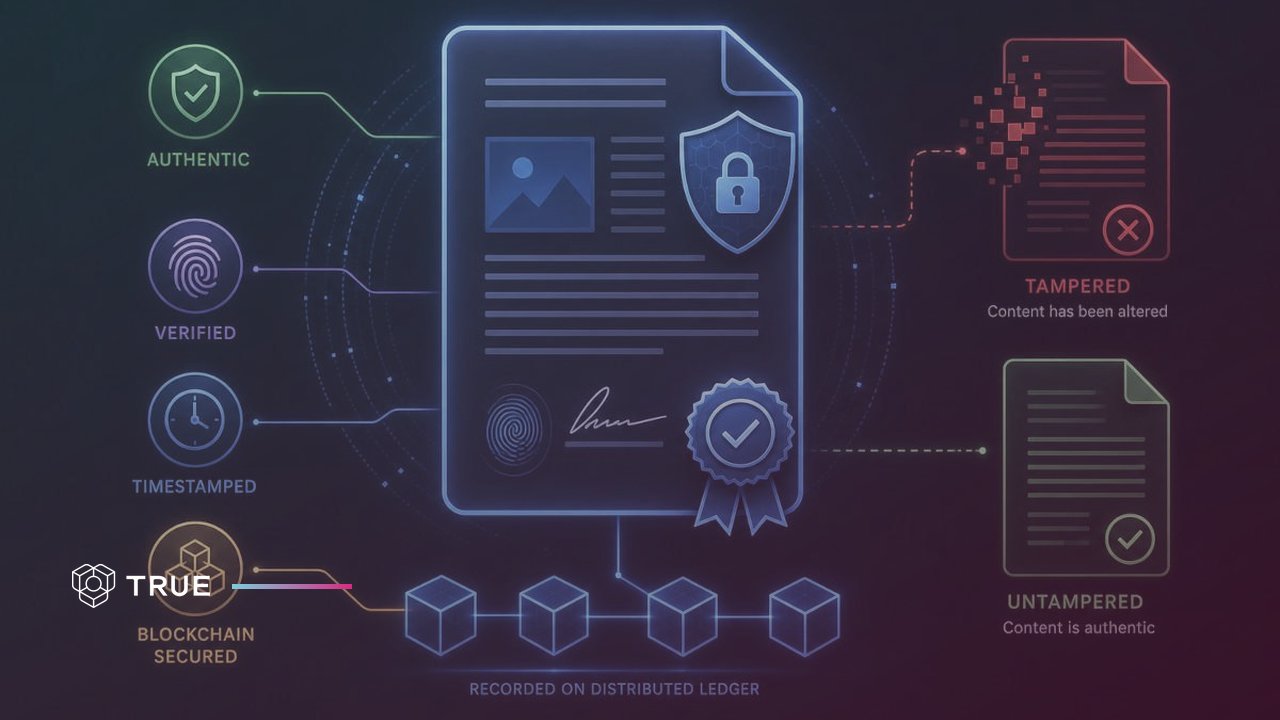
It is a document of its own now, tied to the individual who earned it. It can be checked rather than merely recognised. The register still exists and still does its job inside the organisation. What changed is that the proof no longer depends on anyone visiting it.
Almost none, and for a member organisation with a small office that is the number that decides everything. Arnold has run training businesses for four decades and is not easily impressed by software, which makes her description of the exception worth having.
“I like that the automation works so well. It is extremely rare that we need to step in with manual handling, and if it does happen it is very easy to sort things out with the guides or with the quick and friendly support.”
Helena Arnold, Head of the Competence Council, Almega Friskvårdsföretagen
Nothing at the moment. Arnold says she is satisfied as it is and trusts that TRUE keeps developing in the same direction. From somebody who has watched this industry for 40 years, that is a short sentence carrying a fair amount.
Two other trade bodies that made an authorisation checkable instead of merely recognisable: Golvbranschen and GVK. For how this plays out across membership and trade organisations generally, see digital credentials for professional associations, or read the rest of the TRUE case studies.
A Swedish trade organisation known as FRISK, whose work includes quality assuring personal trainers and PT training programmes.
With a logo. The organisation kept a register of certified personal trainers, and those trainers could use a logo to show they were approved for the licence.
Anyone could use it. Each person used it however they wanted, which produced both good and bad examples, and it was fairly easy for an unauthorised person to use it too.
Very little. The organisation says the automation works so well that manual handling is extremely rare, and when it is needed the guides or support settle it quickly.
Yes. What changed is that the proof of a licence now travels with the trainer and can be checked directly, rather than depending on somebody finding and searching the register.
Every organisation on these pages started with the same question. Give us thirty minutes and we will show you what your own documents would be worth.
Book a callNot sure where to start? Let us help!

Trusted by leading organisations worldwide