TL;DR: A breeder document is a document used to obtain another, more valuable one, such as a birth certificate used to apply for a passport. The U.S. Government Accountability Office defines it as “an ID document issued to support a person’s identity and obtain another document of privilege or of greater perceived value.” Breeder documents are the weak link in identity fraud because a forged one produces genuine documents that pass every later check. The fix is to secure the first document at the moment of issue, which is what TRUE Original does for issuers: every TRUE document is anchored on a public blockchain and can be checked by anyone in TRUE Verify.
A breeder document is a document used as evidence of identity to obtain another, more valuable document, such as a passport, a driver’s licence or a national ID card. The birth certificate is the classic breeder document, also called a feeder document. Every document issued afterwards is only as trustworthy as the breeder document it was issued on.
The U.S. Government Accountability Office (GAO) wrote the definition into its July 2010 testimony on passport fraud to the U.S. Senate:
“A breeder document is an ID document issued to support a person’s identity and obtain another document of privilege or of greater perceived value.” (GAO-10-922T, footnote 3)
The U.S. Department of Health and Human Services draws the circle wider. Its Office of Inspector General wrote in a September 2000 report on birth certificate fraud that breeder documents “allow the holder to obtain other documents” and benefits, such as “resident status, Social Security benefits, loans, and other government aid.”
The European Union uses the same word in law. Recital 10 of Regulation (EU) 2019/1157 on the security of identity cards states that “issuing authentic and secure identity cards requires a reliable identity registration process and secure 'breeder' documents to support the application process.”
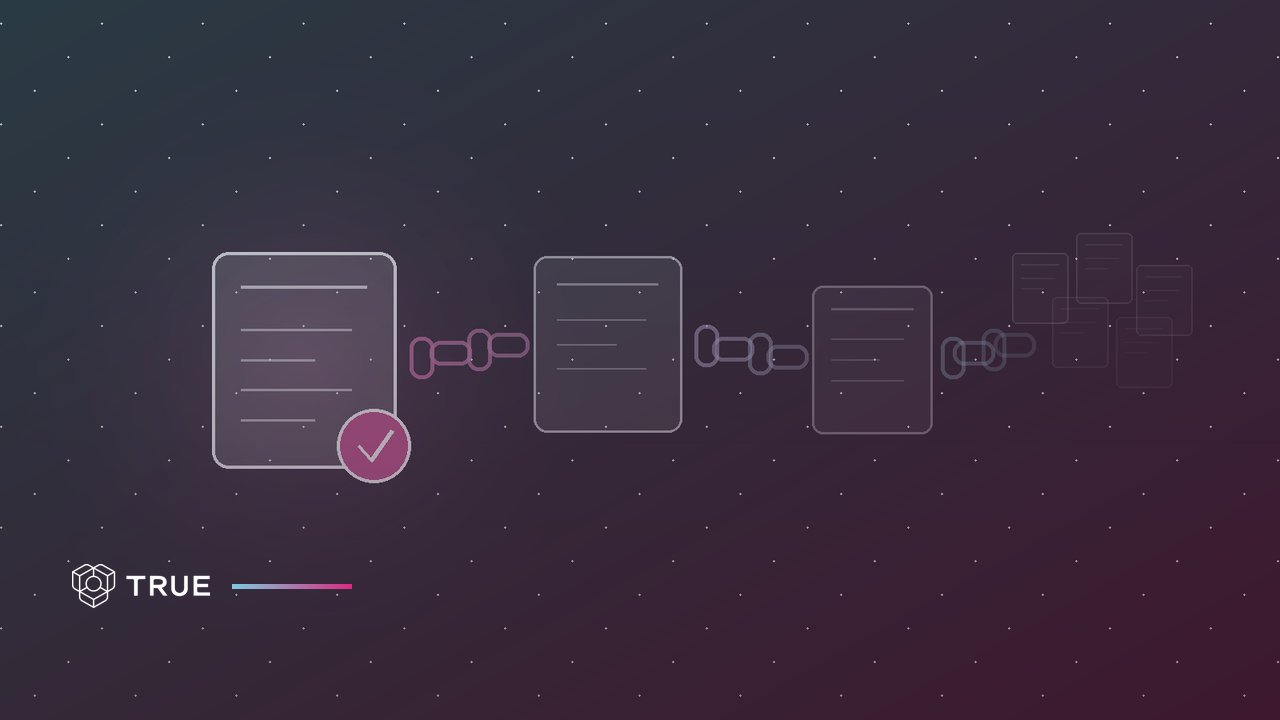
A breeder document is called a breeder document because new documents are bred from it: one birth certificate can produce a Social Security card, a driver’s licence and a passport, each issued on the strength of the one before. The HHS Office of Inspector General drew the chain in its 2000 report as birth certificate, Social Security card, driver’s licence, ending in “Services/Benefits/Credit/Crime”.
Each link is checked against the link before it. Nobody checks the first one again. Secure that first link and the chain holds. Compromise it, and every genuine document built on top carries the lie forward, silently.
Common examples of breeder documents are birth certificates, marriage certificates, civil registration entries and driver’s licences, each of which can be used to apply for a passport or an ID card. In GAO’s 2010 passport tests, the breeder documents were counterfeit “birth certificates and drivers’ licenses”.
The same logic runs through documents outside identity. A diploma is the evidence behind a professional licence. The licence is the evidence behind a job. A forged diploma can produce a genuine licence.
A birth certificate is not a photo ID, and the U.S. Department of Health and Human Services’ Office of Inspector General put its limit plainly in 2000: “A certified copy of a birth certificate is proof only that a birth occurred and was recorded.” Agencies still accept the birth certificate as evidence of age, citizenship and identity when they issue a passport or a driver’s licence. That is what makes the birth certificate a breeder document: it gets a person the ID, it does not replace the ID.
The reason is physical. A birth certificate "is issued without a photograph at birth, containing no identifying features", according to Wikipedia's article on US identity documents, which is why it is "usually only considered proof of citizenship but not proof of identity". The same article calls it a "feeder document". In the United States it still opens the door to a REAL ID: USA.gov lists "Your U.S. birth certificate" as proof of identity and notes that "Your state decides the process and the documents needed to get a REAL ID." A clerk checks a birth certificate by looking at it. A document issued through TRUE Original is checked against its blockchain anchor in TRUE Verify, by anyone, without an account.
Breeder documents are the weak link in identity fraud because a forged breeder document produces genuine documents, and genuine documents pass every later inspection. A passport office checks the birth certificate once, and after that the passport carries the lie inside a booklet that is authentic in every physical sense. In a 2010 undercover test by the U.S. Government Accountability Office, the passport office issued five of seven passports applied for with counterfeit birth certificates and driver’s licences.
GAO’s investigators did not forge a single passport. They forged the documents behind them, which they fabricated “using publicly available software, hardware, and materials,” and applied for seven genuine U.S. passports under fictitious or deceased identities. It was enough. The passport office issued five of the seven genuine U.S. passports they applied for. The State Department mailed five genuine passports to undercover GAO mailboxes. (GAO-10-922T)
The passports were real. Issued by the state, with every security feature intact. The lie was one layer down, in the paperwork nobody looked at again.
This is the breeder document problem, and it is the single most important idea in identity security that almost no one outside the field talks about.
Scale makes the first check thin. According to the State Department, as cited by GAO, over 13 million U.S. passports were issued in fiscal year 2009. Behind them stood a birth certificate system that the HHS Office of Inspector General counted in 2000 at 6,422 different issuing entities, and the same report found that “virtually all Federal and State agencies agree that fraudulent birth certificates are used as ‘breeder documents’ to obtain the genuine documents needed to create new identities.”
Europe reports the same pattern. The European Commission wrote in its 2016 Action Plan on travel document fraud that obtaining authentic documents on the basis of false breeder documents remains one of the biggest threats in document fraud, because it is very difficult to detect. (COM(2016)790) Europol calls document and identity fraud an enabler for most serious and organised crime, and in 2023 alone Frontex reported more than 22,000 fraudulent documents detected at Europe’s external borders. Detection counts only the fraud that got caught.
Breeder documents are easier to forge than the documents bred from them. "Most breeder documents are much easier to forge than e-passports," Stephan D. Hofstetter of the Swiss consultancy Secoia wrote in a report quoted by Biometric Update in April 2024. Europe has started to standardise them. CEN/TS 17489, Secure and interoperable European Breeder Documents, is written by working group 19 of the European Committee for Standardization's technical committee CEN/TC 224; its framework part was published on 18 August 2020 and covers birth, marriage and partnership, and death certificates.
Checking documents later does not work because inspection examines the physical document in front of the officer, not the breeder document used to obtain it years earlier. A forged birth certificate can produce a passport that is genuine in every physical sense, so no amount of scrutiny at the border reveals that its origin was false. The only reliable check is at the source, when the first document is issued.
The instinct is to inspect harder at the border, and that is where most of the effort goes today. Interpol and Frontex run a shared system called FIELDS, launched in 2022, that gives border officers Quick Check Cards showing the security features to look for on a travel document. (Interpol)
FIELDS catches crude forgeries. It inspects the document in front of the officer. It cannot see that a genuine passport was issued on a fake birth certificate three years earlier, and no inspection can find a flaw in a document that is authentic in every physical sense and false only in its origin.
| Dimension | Checking after the fact (today) | Authenticity at the source (eIDAS 2.0) |
|---|---|---|
| When the check happens | At the border or on receipt, often years after issuance | At issuance, once |
| What gets checked | The document's physical security features | Who issued it, and that nothing has changed |
| Catches a forged breeder document | No, the document on top is genuine in every respect | Yes, the chain breaks at the source |
| Who can check | A trained officer with the right equipment | Anyone, in seconds |
| Example | FIELDS Quick Check Cards (Interpol/Frontex) | Trusted issuers, eIDAS 2.0 Art. 45e/45f |
Sweden’s 2021 Skatteverket pilot on strategic addresses found around 500 addresses linked to undeclared work, money laundering, tax crime, fraud and sham marriages, covering more than 1,500 people and turning up 150 suspected cases of exploited identities. Because Swedish identity runs through the folkbokföring population register rather than a birth certificate, that register is the breeder document in Sweden, and it has shown signs of exploitation at scale.
In 2021, Skatteverket ran pilot controls on what it called strategic addresses. The investigations covered 675 people registered with personal identity numbers and 904 with coordination numbers, and turned up 150 suspected cases of exploited identities. The agency’s own conclusion was direct: secure and unique identities are necessary, and the question of biometric data tied to identity must be examined without delay. (Skatteverket, Strategiska adresser)
That conclusion set off a wave of legislation that is still moving. A government inquiry on population registration and coordination numbers (SOU 2021:57). A mandate to examine whether the Tax Agency may store biometric data to stop one person from holding several registered identities (dir. 2023:134, later SOU 2025:75). A proposed new criminal offence targeting the trade in false addresses that feed the register. And in April 2026, a proposal that the Tax Agency and the Migration Agency be allowed to collect and store fingerprints and facial images during identity checks, to prevent a single person from being registered under multiple identities. (regeringen.se)
Every one of these measures aims at the same point: making the first document, the register entry itself, trustworthy at the moment it is created.
Under the EU's eIDAS 2.0 regulation, trusted issuers must sign digital identities and documents cryptographically at the moment of issuance, and Article 45e and Article 45f require verification against authentic public sources instead of inspection after the fact. Article 45e requires member states to let qualified providers verify attributes against authentic public sources, and Article 45f requires public bodies that hold those sources to provide an interface to the wallets. The regulation entered into force in May 2024, making verification at the source a legal requirement across the EU, not only a best practice.
The issuers can be public or private. Authenticity is established at the moment of issuance, not reconstructed later by a border officer with a magnifying glass. Trust lists tell any relying party which issuers are genuine, and issuers can verify each wallet they interact with. (European Commission, Wallet for Issuers)
The same qualified-trust machinery is what makes a qualified electronic seal or timestamp legally recognised EU-wide. The principle that a document should prove its own authenticity from the day it is issued, rather than be judged genuine or fake years later, is becoming European law.
You secure the first document by making it provable at the moment of issue, so that every later check goes back to the issuer’s record instead of the paper in front of the clerk. TRUE Original does this for organisations that issue documents: every TRUE document is anchored on a public blockchain when it is issued, and anyone can check it in TRUE Verify, free and without an account. A TRUE document carries its own proof of who issued it and that nothing has changed since.
The issuer creates the TRUE document in the TRUE Original dashboard, through the REST API or by structured email. TRUE Original anchors a fingerprint of it on one of several public blockchains, among them Ethereum and Polygon, and publishes the TRUE document on the issuer’s own domain. The person who receives it (an employer, a bank, a licensing board) pastes the link, the document ID or the PDF into TRUE Verify, or scans the QR code, and gets a security level rating in seconds.
A forged copy fails that check because its fingerprint matches nothing the issuer anchored. A PDF or a paper certificate has no such record to fail against. TRUE Original has issued over 900,000 documents for more than 200 issuers in over 15 countries, from course certificates and diplomas to licences and memberships, the documents that breed jobs, licences and contracts. See how TRUE Original secures documents at issue, or read how to make a document tamper-proof.
Public authorities use the same model for their own records. Bolagsverket, the Swedish Companies Registration Office, built a concept called Proof of Business with TRUE, in which official documents become secure digital records that anyone can verify. “With the help of TRUE, setting up our concept Proof of Business took eight weeks,” said Erika Sjödin, Innovation Officer at Bolagsverket. Bolagsverket then received a government mandate to investigate a second phase covering licences, trademark certificates and company registrations.
The alternative to securing a document at issue is to cancel it later. The fraudulent use of Puerto Rican birth certificates to obtain U.S. passports was so widespread, GAO reported, that in December 2009 the Puerto Rican government enacted a law invalidating every birth certificate issued before July 1, 2010.
A breeder document is a document used as evidence of identity to obtain another, more valuable document, such as a passport, a driver’s licence or an ID card. The U.S. Government Accountability Office defines it as “an ID document issued to support a person’s identity and obtain another document of privilege or of greater perceived value.” The birth certificate is the classic breeder document.
Common breeder documents are birth certificates, marriage certificates, civil registration entries, Social Security cards and driver’s licences, when they are used to apply for a passport, an ID card or another licence. In GAO’s 2010 passport tests, the breeder documents were counterfeit birth certificates and driver’s licences.
A birth certificate is not a photo ID: the U.S. Department of Health and Human Services’ Office of Inspector General wrote in 2000 that “A certified copy of a birth certificate is proof only that a birth occurred and was recorded.” Agencies accept it as evidence of age, citizenship and identity when they issue a passport or driver’s licence, which is what makes it a breeder document.
A forged breeder document produces genuine documents that pass every later inspection, because the passport or ID card issued on it is authentic in every physical sense. In a 2010 undercover test by the U.S. Government Accountability Office, the passport office issued five of seven passports applied for with counterfeit birth certificates and driver’s licences.
eIDAS 2.0, Regulation (EU) 2024/1183, entered into force in May 2024 and has trusted issuers sign digital identity and documents cryptographically into a citizen’s wallet at the moment of issuance. Article 45e requires member states to let qualified providers verify attributes against authentic public sources, and Article 45f requires the bodies holding those sources to provide an interface to the wallets.
TRUE Original lets organisations that issue documents anchor every TRUE document on a public blockchain at the moment of issue and publish it on their own domain. Anyone can check a TRUE document in TRUE Verify, free and without an account, and get a security level rating in seconds.
Yes, in practice. Both terms mean a document, such as a birth certificate, that other identity documents are issued on, and Wikipedia's article on US identity documents calls the birth certificate a "feeder document".
CEN/TS 17489, Secure and interoperable European Breeder Documents, written by working group 19 of the European Committee for Standardization's technical committee CEN/TC 224. Its framework part was published in August 2020 and covers birth certificates, marriage and partnership certificates, and death certificates.
Every organisation we work with started with the same question. Give us thirty minutes and we will show you what your own documents would be worth.
Book a callNot sure where to start? Let us help!

Trusted by leading organisations worldwide